
If you’re interested in classic cannabis consumption methods, you’re going to want to know how to roll a joint. Though there are plenty of pre-rolled options available, rolling your own joint is a foundational cannabis skill worth learning (and it’s easier than it seems).
Ready to roll? You’re in the right place. Learn tips on hand rolling and how to use filters, cones, joint rollers, and how to roll a cross joint. By the end, you should feel confident in crafting the perfect joint.
Joints at a Glance: A joint consists of cannabis rolled in thin rolling paper, with an optional filter at one end. Filters are recommended for beginners or those with sensitive lungs. There are several styles available, from hand-rolled to machine-rolled to pre-filled cones, but if you’d rather skip the rolling entirely, pre-rolled joints are always an option.
What You’ll Need To Roll a Perfect Joint
Before rolling the perfect joint, you must gather the proper materials.
- Cannabis flower: A standard joint will require roughly 0.5 – 1 gram of flower
- Rolling papers: Available in many sizes, we recommend “single wide” papers to start. You can also use natural rice or hemp paper.
- Grinder: Easier than scissors, a well-made grinder delivers on consistency when breaking down your bud.
- Filter tip or crutch: Optional, though recommended
- A lighter or matches
Optional: You can use a rolling tray to get started, along with a poker tool or pen for packing your joint properly.
Want to skip the prep, but don’t know where to start? Head to our breakdown of all things pre-rolls.
How To Roll a Joint: Step-by-Step
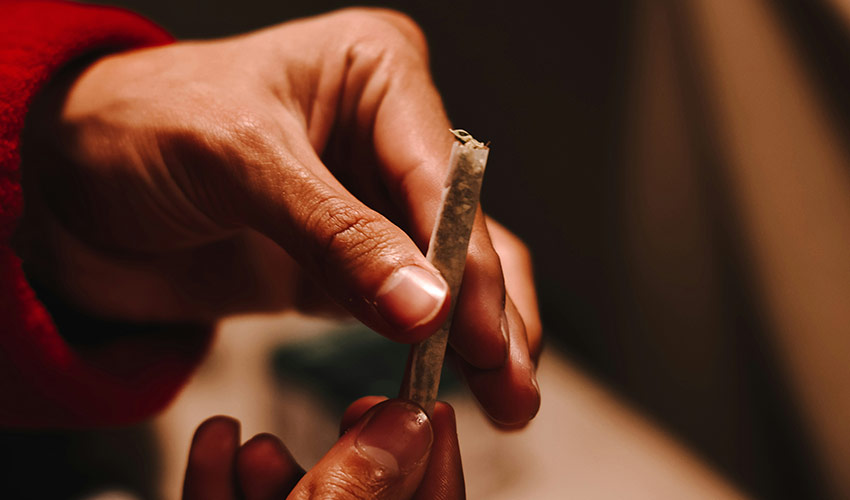
Hand rolling is the most classic method of creating a joint. And remember: If you don’t get it right the first time, don’t be discouraged; just try again. Practice makes perfect.
How to Roll a Joint With a Filter
- Make the filter: Use a pre-made filter tip or fold a small piece of thin cardstock into a “W” shape. This becomes your crutch, keeping the end open and making the joint easier to hold.
- Grind flower: While we recommend using a grinder, you can also purchase shake weed, a “pre-ground” option for extra convenience.
- Set up the rolling paper: Unfold the rolling paper and place it gummy-side up on a sturdy, flat surface. Position your filter at one end, flush with the short edge of the paper.
- Fill and distribute: Evenly spread your ground flower along the paper. For a more potent session, you can add a small amount of concentrates here.
- Roll: Pinching the paper between your thumbs and index fingers, gently roll the flower into a cylinder, working from the filter end outward.
- Seal: Once it’s reasonably even and tight, lick the gummy edge of the paper and press it down firmly to close the joint.
- Pack and twist: Use a pen or poker to gently pack the flower from the open end, then twist the tip closed.
Ready to light up? We’ve got you covered. Find top tips and best practices for how to smoke a pre-roll.
How To Roll a Joint Without a Filter
Rolling without a filter follows the same basic process as rolling with one: grind, fill, roll, seal. However, a few small adjustments and tweaks are still needed to compensate for the lack of a crutch. Without a filter holding the shape at one end, you’ll need to rely more on even distribution and a tighter roll to keep the joint from going slack. Start rolling from the closed end rather than working outward, and take extra care to keep the cylinder even as you go.
The tradeoff is worth knowing upfront: filterless joints can draw in loose bits of cannabis, and filterless joints are harder to hold. To minimize both issues, twist the open end firmly before lighting; tight enough to hold its shape, but not so tight that it restricts airflow.
Other Ways To Roll a Joint: 3 More Methods
Hand rolling isn’t your only option when you’re exploring the world of joints. Here are easy steps for using a joint roller, rolling a joint with a cone, and rolling a cross joint.
How To Use a Joint Roller
Joint rollers, also called rolling machines, make consistently shaped joints with minimal practice. Learning how to use a joint roller is simple:
- Load the flower (same amount as before, 0.5 – 1 gram)
- Close the roller
- Feed the paper through
- Lick and seal
These devices tend to produce a tight, even joint every time, so they’re great for beginners or for those who need a less hands-on option.
How To Roll a Joint With a Cone
Cones are just the thing for parties or sessions with friends since they’re so convenient, and thanks to their popularity, there’s also a large variety of pre-rolled cones on the market, including flavored and terpene-infused varieties. Here are the basic steps to rolling up a cone:
- Grind your flower
- Fill the cone from the open end
- Pack gently with a poker
- Twist to close
Today, you can find cones in many sizes, from regular to king-sized.
How To Roll a Cross Joint
Three burning ends, but only one mouthpiece? Popularized by the classic stoner film Pineapple Express, the cross joint is a unique option for experienced rollers.
- Roll one large joint and one small joint; ensure the smaller joint does not include a filter
- Pierce each joint near the center
- Thread the small joint through so the hole is within the larger joint
- Seal any gaps with small paper strips
- Light all three ends simultaneously
Pro tip: To keep the hole clean, use a needle or skewer for the piercing step.
Become a cannabis rolling pro and get the rundown on how to roll a blunt.
Tips for Rolling the Perfect Joint
Learning to properly roll a joint takes practice and dedication. But the rewards can far outweigh the effort. If you’re just learning the craft, here are some tips to keep in mind:
- Grind your cannabis consistently: A more even grind ensures an even burn
- Don’t overfill: A too tightly packed joint is harder to draw; leave some room for air to flow
- Start at the filter end: If you’re making a joint with a filter, gently roll from the filter end outward, as it gives more control
- Take your time: Rushing leads to loose, uneven joints
- Practice with shake: Start humble; you can build your rolling confidence with value-priced weed before moving up to top-shelf flower
- Store rolled joints properly: Like all cannabis, joints store best in an airtight container kept in a cool and dry place
Learning how to roll the perfect joint is a skill that takes time to master. Remember to start slow and be gentle with yourself. Before long, you’ll be producing pro-grade joints!
Roll Your Next Joint With Mission Dispensaries
Rolling a joint is a skill that only gets easier with practice. Our advice? Start simple, be patient, and experiment with different papers and methods until you find what works. If you want to skip the prep, there are always pre-rolled joints in an endless selection of styles, strengths, and strains at your nearest Mission dispensary.
Whether you’re looking for bulk flower, rolling papers, or pre-rolls, check out our menus in Massachusetts or Illinois to see what’s fresh and in stock. For more on all things cannabis, visit our blog to expand your knowledge.
How To Roll a Joint FAQs
How much weed do you need to roll a joint?
In general, a joint contains between 0.5 and 1 gram of cannabis. To roll the perfect joint, we strongly recommend you grind the cannabis to medium coarseness using a grinder or by finely chopping it with a sharp knife or scissors.
Do you need a filter to roll a joint?
No, though beginners may find that filters make joints easier to smoke. A filter keeps the end open for a better draw, gives you something to hold as the joint burns down, and prevents loose cannabis from coming through. If you’re rolling without one, a tighter twist at the open end helps compensate.
What’s the best rolling paper for beginners?
Most joints are made with “single wide” rolling papers, roughly 2.75” x 1.4”. If you’re a beginner to rolling joints, we recommend this standard size to start with. While there’s no end to options, many joint-rolling fans prefer natural, unbleached materials such as rice or hemp paper.
Why does my joint keep going out?
Usually, it comes down to airflow. An overpacked joint restricts the draw, while an unevenly rolled one can cause the cherry to die between puffs. Make sure your flower is ground to a medium consistency, distribute it evenly before rolling, and avoid packing so tightly that air can’t move through freely.
What is the difference between a blunt and a joint?
Because blunts are typically made with a natural tobacco wrapper, they have a more intense and earthier flavor than joints. If you’re new to cannabis, you may want to start with a joint for a less intense flavor that allows you to focus on the experience itself.

