
If you’re a fan of edibles, chances are, you’ve considered cooking or baking with weed. From CBD brownies to delicious cannabis-infused chicken wings, there’s a whole world of culinary goodness you can explore and enjoy. But learning how to bake with weed is about much more than adding flower to your favorite recipe.
If you’re interested in optimal flavor, reliable effects, and a safe and consistent experience, it pays to understand the fundamentals of baking weed. In this, we’re going to give you just that, sharing our process for making cannabis butter and oil, how the infusion works, and hand out some expert tips on getting the best experience when you’re baking with weed.
Baking with Weed at a Glance
Baking weed-infused foods doesn’t have to be hard. Begin by decarboxylating your cannabis to activate its cannabinoids, then infuse it into butter or oil for consistent potency. Use that infused fat in your recipe, whether you’re making classic brownies or savory dishes, and be sure to dose carefully to avoid overconsumption. Finally, store your edibles properly to preserve freshness and effects.
Why Bake with Weed?
Before we dive in, let’s back up and ask an important question: Why would you bake with weed when you can just smoke it? Lots of reasons, as it turns out.
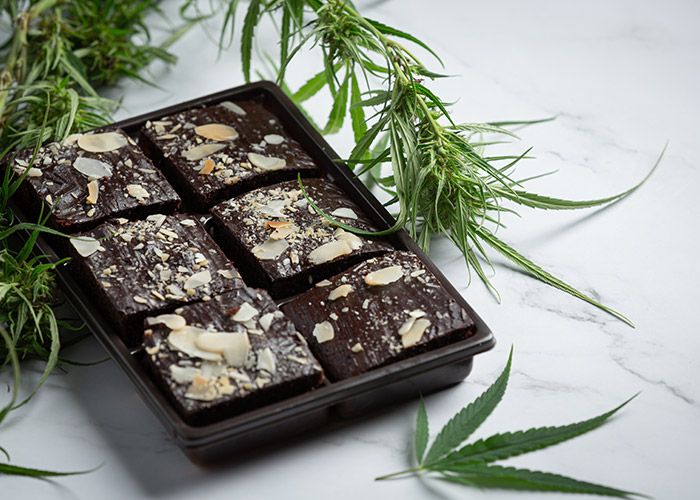
Compared with smoking or vaping, consuming cannabis in edible form is discreet, with no telltale smoke or aroma. However, because of the way our bodies process the cannabinoids, the effects are also quite different.
With inhaled cannabis, the effects come on quickly—typically within a few minutes at most—and they generally last an hour or two. With edible cannabis, the effects take longer to come on, typically between 45 and 90 minutes, though in some cases up to two hours. It’s also not unusual for an edible’s effects to last between 4 and 6 hours, or more.
There are plenty of other cannabis baking benefits. Baking with weed allows you to explore limitless flavor possibilities, and once you’ve mastered proper dosing, it’s easy to create potent but consistent infused products that deliver predictable experiences each time.
How to Bake with Cannabis Flower
You’re probably familiar with some of the classic ways people bake with weed: cake and cupcake recipes, brownies, cookies, and other sweet treats. But once you’ve nailed down the basic steps, you can apply these simple techniques to any baked good you like.
Here’s a step-by-step guide to help you get oriented with how to bake with cannabis.
Step 1: Decarboxylate Your Cannabis
Before you can infuse cannabis into butter or oil, you need to activate its cannabinoids through a process called decarboxylation. Raw cannabis doesn’t naturally produce intoxicating effects until it’s exposed to heat, which converts compounds like THCA into THC.
The most common method is to bake weed in the oven at a low temperature, typically around 230°F, for about 25–30 minutes, just until it turns a light golden brown. This step is essential for unlocking the effects of THC and CBD in any edible recipe.
Want more detailed guidance on oven temps, timing, and tools? Explore our complete Guide to Decarboxylation.
Step 2: Infuse Your Butter or Oil
Once your cannabis is decarboxylated, you’re ready to make cannabutter or infused oil, the foundation for most baked edibles. Because cannabinoids are fat-soluble, infusing them into a cooking fat allows them to be evenly distributed in your recipe.
The process of making cannabutter or oil involves simmering your decarbed flower with butter, coconut oil, or olive oil over low heat for a few hours. After straining, the finished infusion can be used just like regular butter or oil in your baked goods.
Curious about ratios, straining methods, or stovetop vs. slow cooker? Check out our Guide to Cannabis Butter and Oil for step-by-step instructions.
Step 3: You’re Ready to Bake with Cannabis
Now that you have infused cannabutter on hand, you can use it to create your own infused recipes.
An easy way to get started is to follow the recipe for your favorite homemade or store-bought brownie mix and replace a portion of the butter or oil with your newly infused cannabutter. If it’s your first time baking weed brownies and other treats, consider only substituting half the cannabutter for the fat called for in the original recipe.
To ensure a positive weed-baking experience, pay close attention to baking temperature and time, as THC begins to degrade above 300°F. As for potency, be sure to mix your batter thoroughly to avoid “hot spots” which might be more (or less) potent than the rest. Finally, if you find your recipes have a too-strong “weed taste,” consider incorporating ingredients such as cocoa, vanilla, or spices to mask any bitterness or undesirable flavors.
What can you make with your cannabutter? Nearly anything! Brownies, cookies, and cakes are great starting points, but you can also go the savory route and add them to pasta sauces, spread over bread, or any number of tasty eats.
Check out our own take on the classic cannabis edible with our Weed Brownie Recipe.
What About Baking with Concentrates?
Yes, you can bake with cannabis concentrates, but proceed with care. Concentrates are highly potent, so proper dosing is essential to avoid overconsumption.
To use a concentrate in your recipe, start by fully dissolving it into the fat (like butter or oil) called for in your recipe. Gently warm the fat and stir in the concentrate until fully blended. This helps ensure even distribution throughout your batter and more predictable dosing in every bite. Keep in mind:
- Always mix thoroughly to prevent “hot spots” with higher potency.
- Avoid baking above 300°F, as high heat can degrade THC and affect the final potency.
For best results, start low with dosing and be patient, as concentrates can make very strong edibles.
How to Dose Your Edibles
What’s the right dosage for homemade edibles? Dosing cannabis edibles can be a challenge for the most experienced among us, but here’s a simple formula that should help:
- Weigh your flower to determine its weight in grams.
- Multiply that number by 1,000 to get a figure in milligrams (1 gram = 1,000 milligrams)
- Then, multiply that number by the THC percentage of the flower used
- Divide that number by the number of servings from your recipe
For example, if you use 3.5 grams of 20% THC flower to make cannabutter for a batch of a dozen cookies, here’s how the question would look:
- 3.5 x 1000 = 3500 milligrams
- 3500 milligrams x 20% = 700mg THC
- 700 ÷ 12 cookies = 53.33mg THC per cookie
What does this mean in real-world terms? Here are some rough guidelines:
- Light (2 – 5mg THC): For most people, this imparts a manageable experience that fosters relaxation and fun.
- Moderate (5 – 10mg THC): At this dosage, the effects are likely somewhat intoxicating, with strong euphoria and shifts in motor control and perception.
- Strong (10 – 20mg+ THC): At this dose, most people will feel noticeably intoxicated. Be sure to stay safe and resist any urge to operate a motor vehicle or engage in other potentially dangerous activities.
Pro Tip: When you’re first baking with weed, remember that the cannabis in edibles takes longer to take effect than inhaled cannabis, generally between 45 – 90+ minutes.
Find more helpful dosing tips in our Edible Dosing Guide.
Storing and Re-Heating Best Practices
Just as heat and light are the enemies of potency in cannabis flower, they’re also best to avoid when it comes to cannabutter, cannaoil or finished cannabis-infused recipes. For storage, package your infusions in an airtight container and refrigerate. Alternatively, you can freeze your products in a sealed bag, though you’ll want to thaw them completely for optimal texture. Here’s a rule of thumb for when to consume your edibles:
- Room temperature: 2 – 3 days
- Fridge: 1 week
- Freezer: Up to 3 months
Clearly label each batch of edibles or cannabutter with the estimated potency and the date prepared. As with all cannabis products, especially those that resemble non-infused treats, keep them out of the reach of children or others who shouldn’t have access to cannabis.
To reheat your baked goods, do it gently. Avoid hot microwave bursts that can dry out the products and negatively impact their fragile terpenes. It’s best to go the slow route for optimal results.
Troubleshooting and Expert Baking Tips
As with many things in life, learning to bake with weed generally involves a bit of trial and error. Here are a few of the most common pitfalls, along with real-world tips on how to avoid them.
My edibles taste grassy.
This is generally due to an excess of chlorophyll, a compound found in many green plants that imparts a distinctive flavor and aroma. The best way to avoid this is to handle your weed gently when making cannabutter, resisting the urge to squeeze every bit of butter from the infusion (and thus adding more chlorophyll but not THC).
Bitter or off flavors can also be a sign that the edibles were baked too long or at too high a temperature.
My edibles aren’t as potent as I hoped.
When you’re baking with cannabutter, temperature and timing are crucial. Remembering that THC starts to degrade above 300°F or so, try not to exceed this temperature, especially for extended periods.
My edibles were too strong.
Especially when you’re first working with cannabutter and edibles, it’s easy to overdo it. We suggest using a mix of infused and regular butters in your recipes for a gentler, more predictable experience.
Make Your Infusions Shine with Quality Flower from Mission
Baking with weed isn’t difficult, but it requires patience and attention to detail. And now that you know how to decarboxylate, infuse, and bake using cannabis, you should have everything you need to create top-notch products at home. To make fantastic cannabutter that will elevate your favorite treats, you’re going to want top-shelf cannabis to infuse it—that’s where we come in.
At Mission, you’ll find a huge selection of locally grown flower, offered in every style and price point. Stop by any of our locations across Illinois and Massachusetts and see what’s fresh right now. If you need some guidance or weed baking tips, just ask, we’re always here to help.
Baking with Weed FAQs
What temperature should you bake weed at?
THC starts to degrade above 300°F. So while you should follow directions in the recipe you’re using, try not to bake edibles at very high temperatures for extended periods.
Can you bake with raw weed (without decarbing)?
Decarboxylation is a key process that converts the inactive THCA and CBDA into active THC and CBD, so it really can’t be skipped. While baking raw flower may automatically decarboxylate it, when baking with weed, it’s better to carefully decarb it first for more consistent results. Check out our guide to decarboxylation.
How much weed should I use when baking?
When you’re deciding how much weed to bake with, we suggest you do a simple calculation to assess how much is needed. Follow this basic calculation to determine the dose you’re looking for: grams × THC% × 1000 ÷ servings.
Can I use cannabis oil instead of butter?
Yes, cannabinoids are fat-loving compounds so you can infuse nearly any fat when you’re baking with weed.
Why do my edibles taste bitter or grassy?
Bitter or grassy-tasting edibles are a sign either that the cannabutter you used contains too much chlorophyll or that the edibles were baked too long at too high a temperature.
How long does it take for weed edibles to kick in?
With edible cannabis, the effects generally take between 45 and 90 minutes, though in some cases up to two hours. It’s not unusual for an edible’s effects to last 4 to 6 hours, and in some cases even longer.
Can I freeze my cannabutter or edibles?
Yes! We recommend you package your infusions or baked goods in a clearly marked sealed bag. When using them, you’ll want to allow them to thaw completely for optimal texture.

