
Sure, you may have enjoyed a few cannabis products, but do you know what a full weed plant actually looks like? Appreciate the plant behind the smoke with our guide to cannabis plants.
Discover what they look like, how to identify them, and how their appearance changes from seedling to harvest. Along the way, we’ll cover plant anatomy, growth stages, identification characteristics, and more.
Cannabis Plants at a Glance: Cannabis plants are recognizable by their leaf shape and pattern, structure, and distinctive aroma. They grow as bushy, branching plants ranging from 2 to 12+ feet tall. The plant’s distinctive leaves have serrated edges, typically forming 5-7 finger-like leaflets, while the flower gets covered in sticky trichomes, where the bulk of cannabinoids like THC is produced.
What Does Cannabis Look Like? How to Identify A Weed Plant
Cannabis is sometimes confused with Japanese maple or other palmate-leaf plants, but it has some highly distinct features. Understanding the key parts of a cannabis plant helps you identify what you’re looking at, and may even increase your enjoyment of its effects. Here’s a guided tour of our favorite leafy green.
Fan Leaves
These are the large, iconic palmate leaves with serrated edges; they typically have 5–9 finger-like leaflets radiating from a center stem. They’re used for photosynthesis, and while not smokable, they’re highly recognizable. The color ranges from bright to dark green, sometimes with purple hues.
Sugar Leaves
These smaller leaves grow close to and around the buds. They’re covered in trichomes, the tiny resin glands that produce terpenes and cannabinoids. They’re often trimmed during harvest, but some growers will leave them on for a “sugar-coated” appearance.
Colas and Buds
Colas and buds are the parts of the plant that are harvested, dried, and consumed. The cola is the main flower cluster at the top of the cannabis plant’s branches. Buds are the dense, resinous flowers that produce cannabinoids such as THC and CBD, as well as terpenes.
Want to learn more about our favorite part of the cannabis plant? Head to our guide on cannabis flower.
Nodes and Stems
Nodes are the points where branches, leaves, and flowers emerge from the main stem. The stem itself is the thick, fibrous, sometimes hollow structure in the center of the plant. The distance between nodes varies by strain and growth conditions.
Pistils (Hairs)
These hair-like strands emerge from female flowers. Starting as white or translucent, they turn orange and brown as the plant matures, and are a useful sign of bud development in female plants.
Trichomes
These are the tiny, crystal-like glands that cover buds and sugar leaves, producing the bulk of the plant’s cannabinoids and terpenes. Trichomes give buds their sticky feel and frosty appearance.
What Does a Full-Grown Weed Plant Look Like? Growth Stages & Visual Changes
Cannabis plants undergo dramatic changes as they grow, with each growth stage having distinctive features. Here’s what to expect at each point in the journey.
Seedling Stage
What does a small weed plant look like? At the seedling stage, they first appear as a small sprout with a set of rounded cotyledon (or “first”) leaves.
Next come the true serrated cannabis leaves you may recognize, usually forming 1-3 fingers, and as a whole, the plant will be a bright, delicate green, roughly 2-3 inches tall, and uniform across all strains.
Vegetative Stage
At this stage, the plant focused on rapid vertical and lateral growth. The focus is still on leaf and stem production, not flowers. Those fan leaves develop their full palmate structure with 5–9 “fingers,” and the plant becomes bushy with multiple branches. Its height will range from 1 to 6+ feet, depending on genetics and environment.
Flowering Stage
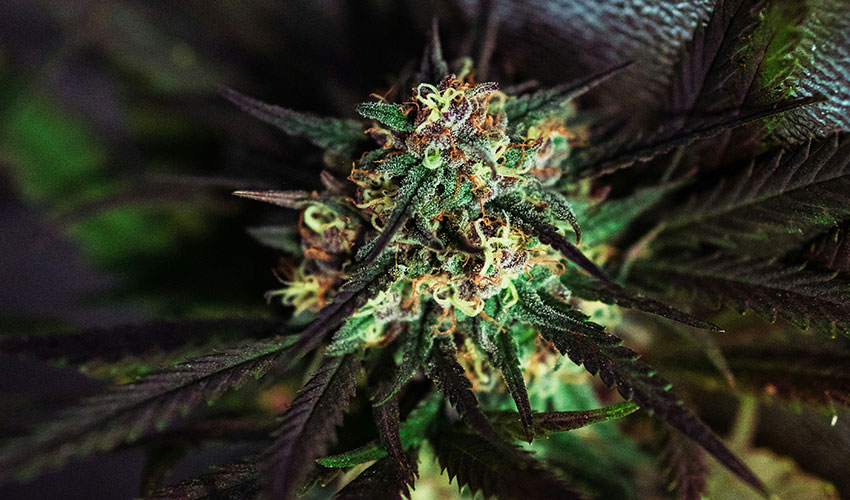
When the flowering stage begins, all the energy goes to bud development rather than overall height. Buds begin forming at the nodes and branch tips, while pistils (the tiny white hairs) emerge from flower sites. Trichome production increases, making the plant sticky and aromatic, and as it continues to mature, the leaves may develop purple, red, or gold hues.
Mature or Harvest Stage
The Plant stops vertical growth at this stage, as the buds become dense, swollen, and heavily coated in trichomes, and the pistils darken from white to orange and brown. This is the phase of peak resin production; hence the bud’s frosty, crystalline appearance and strong, pungent aroma.
Why Do Some Cannabis Plants Turn Purple?
If you’ve ever sampled a purple-tinged strain like Granddaddy Purple, Purple Haze, or Purple Kush, you know that certain types of cannabis develop purple, red, and even blue hues. These come from anthocyanin pigments, the same compounds that color blueberries, grapes, and autumn leaves.
This coloring is purely aesthetic: it doesn’t indicate higher potency, better quality, or different effects. Instead, it’s a trait associated with certain strains, and it also can be a sign of having been cultivated in colder climates. Cooler temperatures during flowering can trigger anthocyanin production, causing purple or blue leaves and buds. Finally, slightly acidic conditions can enhance purple coloring in plants’ leaves, stems, and, sometimes, buds.
How to Tell a Male from a Female Cannabis Plant
What does a male cannabis plant look like? It will appear similar to a female one during its early growth phase, but will develop distinct characteristics during flowering. Some other markers include:
- Female Plants: These are the only plants that produce the flower consumers want for consumption. Female plants produce pistils (white or orange hairs) at nodes, develop dense, resinous buds, and are covered in trichomes.
- Male plants: Used for breeding, not consumption. They produce pollen sacs (small, ball-shaped clusters), lack pistils and sticky buds, and are generally less aromatic than female plants.
For a deeper look at what female and male weed plants look like (and why it matters), read our guide on male vs female cannabis plants.
Do Sativa, Indica, and Hybrids Look the Same? Key Visual Differences
When you’re trying to figure out what a certain strain of cannabis looks like as a plant, its structure offers key visual cues. Different strain types have recognizable visual characteristics, along with the natural variations created by modern plant breeding.
Plant Structure
Plant structure is one of the easiest ways to tell strain types apart, especially between indicas and satvivas:
- Sativa: Tall, lanky (10-12+ feet outdoors), longer node spacing
- Indica: Short, bushy, compact (3-6 feet), tight node spacing
Hybrids fall somewhere in between the two, with height and structure varying depending on their specific genetic lineage.
Leaf Characteristics
Leaf shape is another reliable visual cue. Just like the structure, sativa leaves also lean lanky and long with narrow leaflets, giving the plant a delicate, finger-like appearance. Indica leaves are broader and wider, with fat, overlapping leaflets that tend to give the plant a denser look.
Blending both traits, the hybrids’ leaves can range from narrow to wide depending on which parent genetics dominate.
Color & Appearance
Most cannabis plants are some shade of green, but the depth of color and secondary hues vary by strain type:
- Sativa: Lighter green color, as in Strawberry Cough
- Indica: Darker green, sometimes with purple hues, as seen in Do-Si-Dos
- Hybrid: Variable coloring depending on genetics, for example, Blue Dream
For more on what cannabis plants look like by strain type, explore our guides on indica, sativa, and hybrid strains.
Mission Dispensaries: Your Go-To Cannabis Resource
With visually distinctive palmate leaves, resinous buds, and a unique structure, cannabis plants are some of the most striking plants in the natural world. And in our experience, understanding the plant’s appearance only deepens our appreciation for the delicious, aromatic flower we know and love.
The beautiful buds we described in this guide are exactly what you’ll find in Mission: carefully cultivated, harvested, and cured. Visit any Mission dispensaries in Massachusetts or Illinois to explore your region’s go-to cannabis flower. Our budtenders can help you find the perfect strain, or visit our Mission Blog for more tips and info. We’re always here to help!
Cannabis Plant FAQs
How big do cannabis plants get?
Depending on type, climate, location, and other factors, weed plants can range from roughly 2 to over 12 feet tall. What does a small weed plant look like? Think of a squat and bushy shrub—the typical indica shape—while sativa plants tend to be taller and “leggier.”
What part of the cannabis plant do you smoke?
The smokable part of the weed plant is called the flower. Before it can be enjoyed, it’s harvested, dried, and cured to drive off moisture and to concentrate its flavor and potency.
What does a weed plant look like before it buds?
During the so-called vegetative stage, a cannabis plant looks like a lush, leafy bush with a central stalk and branches covered in those iconic, finger-like leaves.
What does a cannabis plant smell like?
Thanks to the broad range of aromatic terpenes and other compounds, cannabis plants emit a wide array of odors. Many describe a musky, earthy, and rich “green” aroma, sometimes called “the weed smell.”
What does a sativa vs indica plant look like?
Indica strains are often described as short, squat, and bushy. Sativa strain plants, by comparison, tend to grow taller, stalkier, and more lanky. In addition, indica leaves are shorter and thicker than finger-like sativa leaves.

